Research
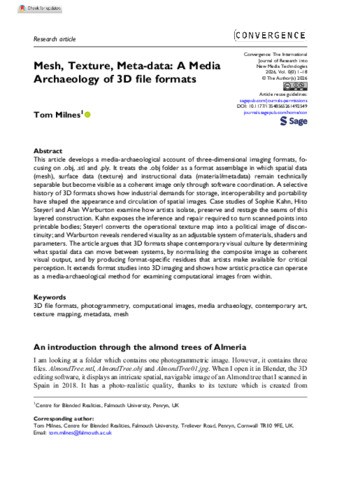
Mesh, Texture, Meta-data: A Media Archaeology of 3D file formats
Tom Milnes.
This article explores how 3D file formats shape the appearance and circulation of computational images. Through the histories of .obj, .stl and .ply and artworks by Sophie Kahn, Hito Steyerl and Alan Warburton, it examines how mesh, texture and metadata combine to construct spatial images, and how artists expose the technical processes behind their apparent coherence.
Returning to the Preserving Machine: Mutations and the Probabilistic Image
Tom Milnes, Peter Ainsworth and Sam Plagerson.
Revisiting the collective’s earlier research through Philip K. Dick’s The Preserving Machine, this commentary examines the shift from photogrammetry to probabilistic imaging, including neural radiance fields, Gaussian splatting and generative 3D systems. It asks how preservation, mutation and machine agency change when images emerge through computational inference, and considers the datasets and infrastructures that shape them.
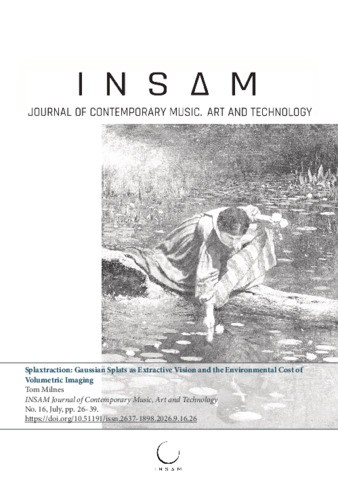
Splaxtraction: Gaussian Splats as Extractive Vision and the Environmental Cost of Volumetric Imaging
Tom Milnes.
This article examines the environmental and material conditions behind Gaussian splatting and volumetric imaging. It introduces “splaxtraction” to describe how these images turn environments into computational resources while depending on extractive systems of labour, energy, minerals and hardware. Drawing on media archaeology and media ecology, it proposes ways for artistic and curatorial practice to make these hidden costs visible.
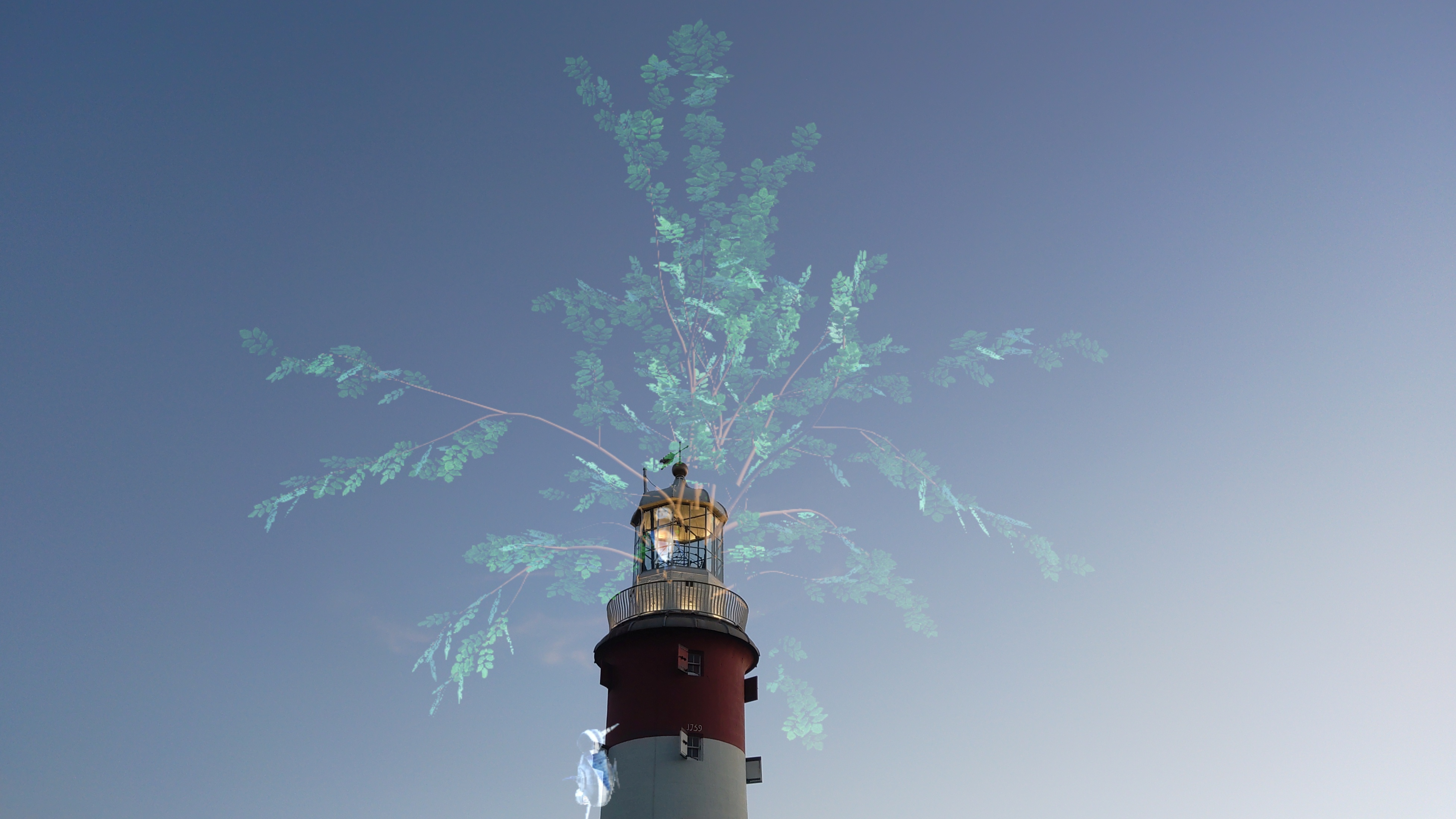
Ashnihilation
Tom Milnes.
This practice-led project explores how augmented reality can support emotional and critical engagement with ecological crisis. Animated, 3D-scanned hybrid species affected by ash dieback combine speculative design, posthumanist theory and community co-creation in site-specific digital storytelling.
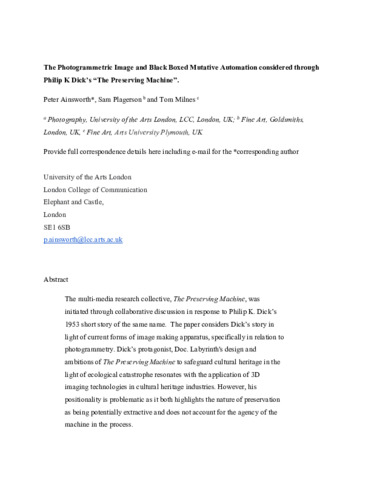
The Photogrammetric Image and Black-Boxed Mutative Automation Considered through Philip K. Dick’s The Preserving Machine
Peter Ainsworth, Sam Plagerson and Tom Milnes.
This article examines photogrammetry through Philip K. Dick’s The Preserving Machine, questioning claims of objectivity, accuracy and automation in computational image-making. It argues that photogrammetric images should be understood relationally, as part of wider assemblages of technology and meaning.
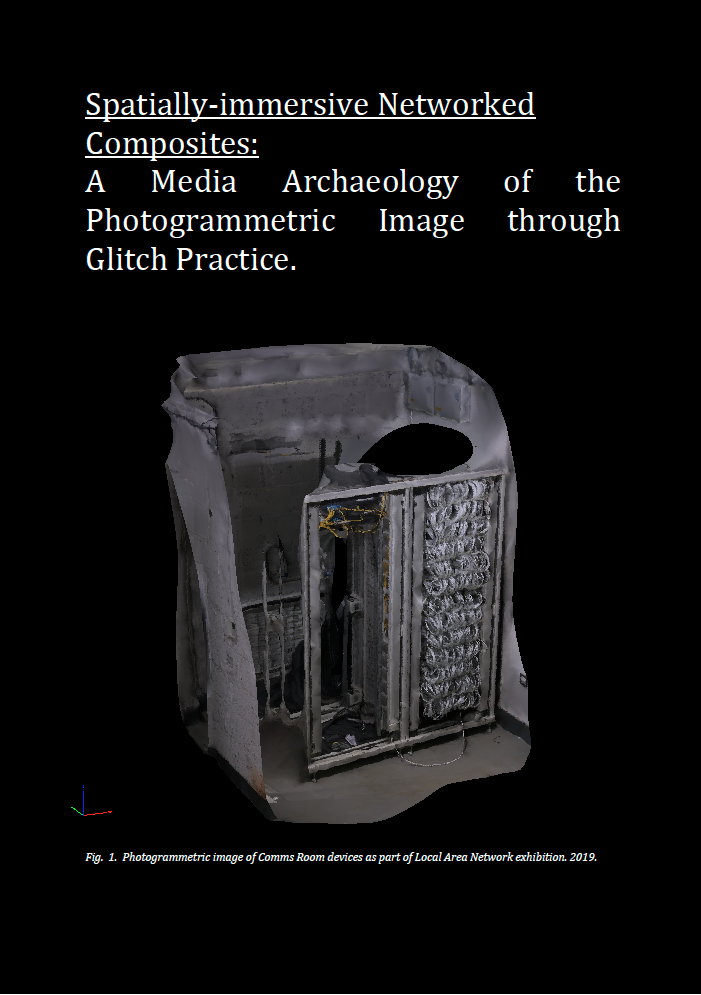
Spatially Immersive Networked Composites: A Media Archaeology of the Photogrammetric Image through Glitch Practice
Thomas Milnes.
This practice-based doctoral research examines the aesthetics of photogrammetric images and proposes “Spatially-immersive Networked Composites” as a framework for understanding computational, navigable imagery. Through sculpture, video, augmented reality, media installation and glitch-led media archaeology, it foregrounds the errors and algorithmic processes that reveal the image’s material construction.
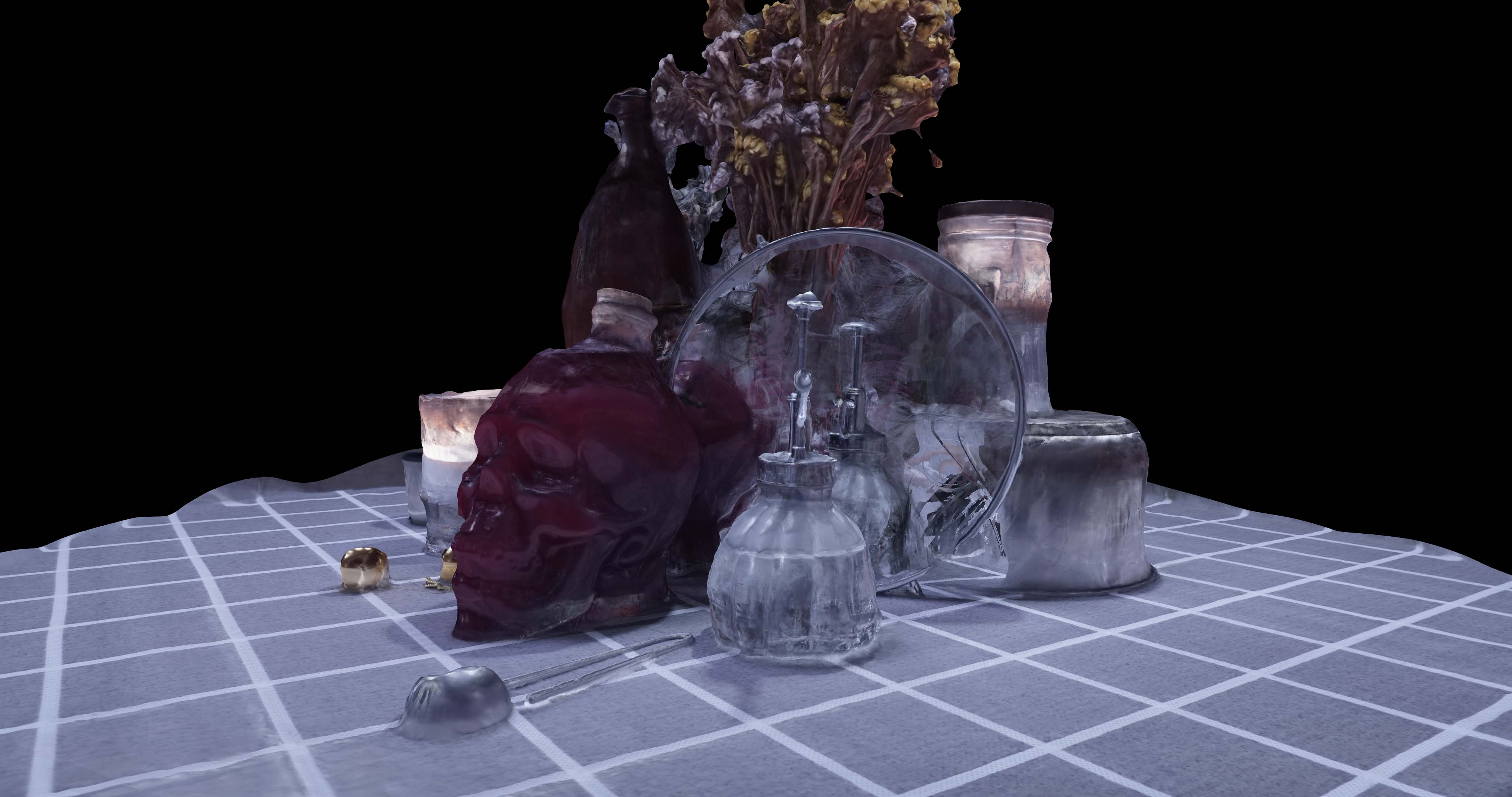
Ephemer(e)ality Capture: Glitching The Cloud through Photogrammetry
Tom Milnes.
This artistic research exposition uses reflective, transparent, specular and patterned objects to disrupt cloud-based photogrammetry. The resulting glitches expose how imaging algorithms interpret space and propose new, critically reflexive methods of image-making.